In the pursuit of corporate longevity, many organizations fall into the trap of prioritizing volume over value. They focus on increasing turnover, expanding headcount, or capturing market share, often at the expense of true economic utility. However, the most resilient enterprises in the modern era operate under a different philosophy: Value Management (VM).
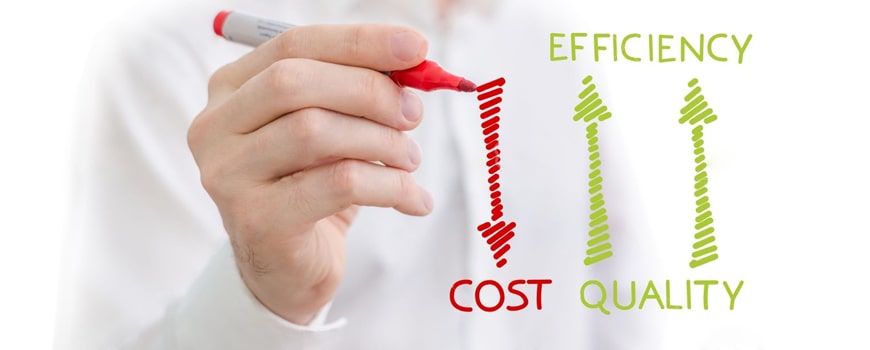
Value Management is a structured, team-oriented approach to making decisions that maximize the functional value of a project, product, or process while minimizing costs. It is not about simple cost-cutting; it is about optimizing the ratio between function and resources. Reaching a successful Value Management Strategy requires a cultural shift and a rigorous adherence to specific methodological phases.
Defining the Value Equation
To implement a Value Management strategy, one must first understand the fundamental equation that governs it. In professional circles, value is expressed as:
$$Value = \frac{Function}{Cost}$$
Reaching a high-value state means either increasing the utility (Function) of an output or decreasing the resources (Cost) required to produce it—without compromising quality or performance. A true strategy seeks to do both simultaneously.
Phase 1: The Information and Analysis Foundation
The first step in reaching a Value Management strategy is the Information Phase. You cannot manage what you do not understand. An enterprise must gather a multi-disciplinary team to dissect the current state of a project or business unit.
Functional Analysis System Technique (FAST)
The core of VM is “Functional Analysis.” Instead of looking at what a product is, the team must define what it does. For example, a chair is not just a collection of wood and fabric; its function is to “provide support” and “ensure comfort.” By breaking down every component of a business into its primary and secondary functions, leadership can identify which elements add value and which are merely “cost-creators” with no functional benefit.
Phase 2: Speculative Creativity and Innovation
Once the functions are identified, the next way to reach a Value Management strategy is through the Creative Phase. This involves high-level brainstorming sessions where the goal is to find alternative ways to perform the identified functions.
The key here is to suspend judgment. If the primary function of a software module is to “validate user identity,” the creative phase explores every possible way to achieve that—biometrics, blockchain, third-party integration, or simplified password protocols. By exploring alternatives, the enterprise often finds that the traditional way of doing things is not necessarily the most valuable way.
Phase 3: The Evaluation and Selection Process
Not every creative idea is a viable business strategy. The Evaluation Phase is where the team applies a cold, analytical lens to the alternatives generated. Reaching a strategy requires filtering these ideas based on:
- Feasibility: Can we actually build this with our current technology?
- Economic Impact: Does the alternative significantly lower the cost or increase the function?
- Risk Profile: What are the potential downsides of changing the current process?
A common tool used here is the Life Cycle Costing (LCC) analysis. A Value Management strategy must account not only for the initial cost of implementation but also for the long-term maintenance and disposal costs. A cheaper component that breaks twice as often is, in reality, a low-value choice.
Phase 4: Strategic Development and Proposal
After selecting the best alternatives, the enterprise moves into the Development Phase. This is where ideas are turned into concrete business cases. To reach a successful strategy, these proposals must be supported by data, technical drawings, and projected ROI (Return on Investment) calculations.
The goal of this phase is to convince stakeholders that the proposed changes are not just “saving money,” but “improving the enterprise.” A Value Management proposal should highlight how the change enhances the customer experience, improves speed to market, or strengthens the company’s competitive moat.
Phase 5: Implementation and Continuous Monitoring
The final way of reaching a Value Management strategy is through rigorous execution. Many strategies fail because they are treated as one-time events rather than continuous cycles.
The Role of a Value Management Office (VMO)
Large enterprises often establish a VMO to oversee the implementation of these strategies. This office ensures that the “value gains” identified in the earlier phases are actually realized. It monitors performance metrics and provides feedback loops, allowing the company to adjust the strategy as market conditions change.
Overcoming the Barriers to Value Management
Reaching a Value Management strategy is often met with internal resistance. Two major hurdles typically emerge:
- Organizational Silos: Value is often lost in the “gaps” between departments. A VM strategy requires cross-functional collaboration where finance, engineering, and marketing work together.
- Short-termism: Value Management is a long-term play. Organizations focused solely on the next quarterly report may be reluctant to invest in the research and development required to optimize value.
To overcome these, leadership must incentivize “value-creation” rather than just “cost-savings.” When employees are rewarded for finding more efficient ways to deliver high-level functions, the strategy becomes self-sustaining.
Conclusion
Reaching a Value Management Strategy is an architectural challenge that demands discipline, creativity, and a relentless focus on function. It moves an enterprise away from the “more is better” mentality and toward a “better is better” reality. By systematically analyzing functions, exploring creative alternatives, and evaluating life-cycle costs, an organization can ensure that every dollar spent is an investment in excellence.
In an increasingly crowded marketplace, value is the only true differentiator. Those who master the ways of reaching a Value Management strategy will not only survive the shifts of the global economy—they will define the standards of their industry.
Would you like me to create a step-by-step checklist for your first Functional Analysis workshop, or perhaps develop a template for a Life Cycle Costing report?